
Stay & Play Program:
What to Expect
This page offers a deeper dive into what you can expect from our Stay & Play program with various lengths of stays. Here’s a more general overview of the Stay & Play program.
Before We Dive In: A Few Important Notes
On Potty Training
Small breed dogs tend to be slower to become fully potty trained than larger breeds. It's not unusual for it to take 6 months or more before they're reliable. The key during this time is minimizing opportunities for accidents so they develop good habits. We don't use potty pads (they can teach puppies to gravitate toward rugs and soft surfaces) and instead focus on getting them outside consistently so they learn the right patterns from the start.
No matter how long your puppy stays with us, plan to keep them confined to an exercise pen or crate (or under your direct supervision) for at least a few months after they come home. Accidents will still happen, especially as they adjust to a new environment and routine. The milestones below reflect progress toward good habits, not a finish line – you'll need to continue reinforcing these patterns at home.
On Vaccinations
Puppies typically arrive here at 8 weeks old, and we normally continue along with a standard vaccination schedule while they're here.
On Regression
Puppies don't learn in a straight line. It's completely normal for them to seem like they've mastered something one week and forgotten it the next. This isn't a sign that training isn't working – it's a normal part of how puppies grow. Consistent, patient training through these phases helps the learning stick. We'll note in the milestones below where regression is especially common, and why having your puppy in a structured environment during those times can be so helpful.
On the Transition Home
Puppies need time to adjust when they go home. Even a well-trained puppy will need patience and consistency as they settle into a new environment. For instance, it's typical for them to cry when they’re alone in an unfamiliar place, even if they were comfortable with alone time here. You may also see some temporary regression in skills they had down pat with us. This is normal! Stay consistent and they'll get through it.
Patterns at Each Stage
Every puppy is different, and we can't guarantee specific milestones for any individual pup. What follows is a general idea of what we often see at various stages, to help you think about how long you'd like your puppy to stay with us.
Some puppies progress faster or slower than others, and that's completely normal. We adapt our approach to each puppy and prioritize their wellbeing and confidence over hitting rigid timelines. We'll share regular updates throughout your puppy's stay and are always happy to answer questions along the way.
2 weeks with us
(going home at ~10 weeks old)
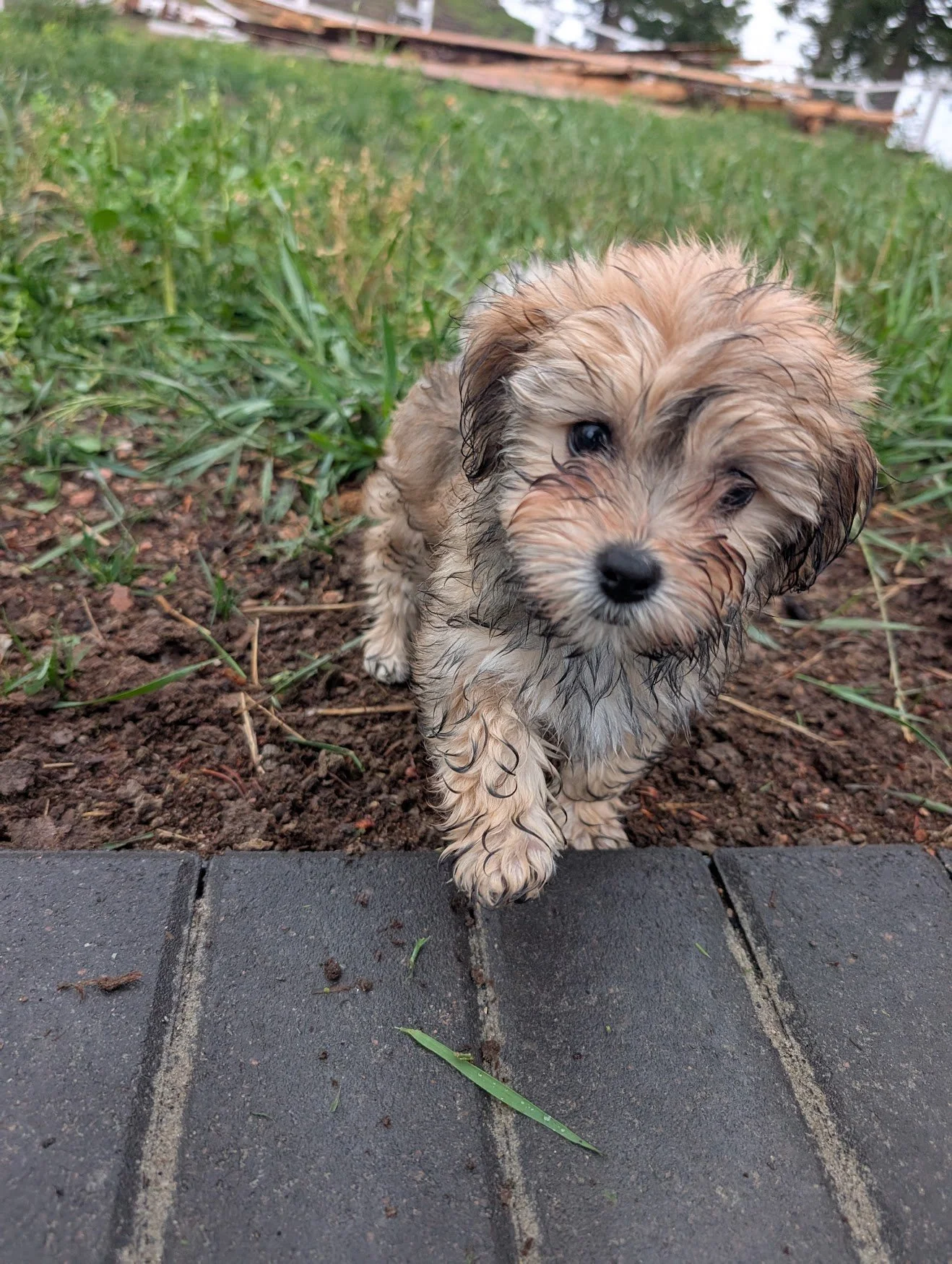
Lola
Your puppy is adjusting to life away from mom and littermates. They're living alongside our family and dogs, learning to play politely and read social cues from our well-mannered adult Havanese. They've also had their first encounters with our horses and barn cats. This helps build early confidence around novel sights, sounds, and smells.
They're sleeping through most of the night in the crate, though early wake-ups and occasional accidents are still normal. We've introduced name recognition, "touch," and started on "sit." "Touch" is especially useful – it gives you a tool to redirect your puppy's attention back to you when they're distracted, worried, or overstimulated, and it's a building block for recall later on.
They're getting comfortable with a leash and may be starting to follow it, but they need active support when taking short walks. They're going outside regularly and starting to connect that with potty time, but still having accidents in their exercise pen. We're working with them daily to get them used to being brushed and having their feet touched. They're also learning that it's okay to be alone sometimes – spending time in their crate and pen without constant human contact.
At this age, regression is more about the natural ups and downs of adjusting to a completely new life. Some days they'll seem confident and settled, and others they'll be needier or more easily overwhelmed. This is all normal.
3-4 weeks with us
(going home at ~11-12 weeks old)
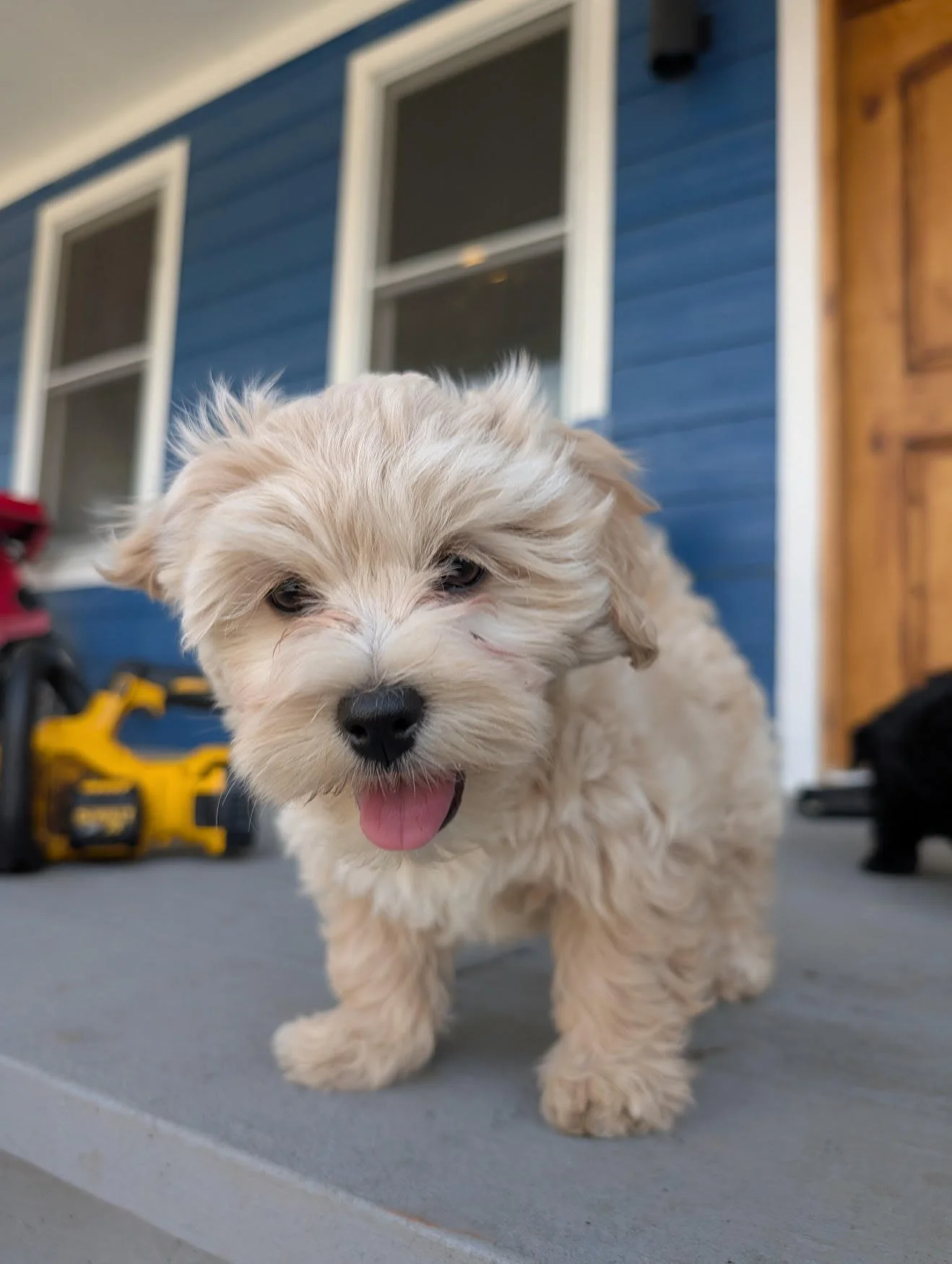
Stella
Confidence is growing, though they're still cautious in new situations. Nighttime accidents are becoming more rare. "Sit" and "touch" are solid, and we've introduced "eyes" – teaching them to make and hold eye contact on command. Like "touch," this becomes an invaluable tool for getting and keeping your puppy's attention in distracting situations. We've also started "down" and "spin."
Leash walking is comfortable in familiar environments. We're taking routine walks around our 20-acre mountain property – plenty of new sights, sounds, and smells to explore, but in a controlled setting before we introduce busier environments like parks and sidewalks. Walks are still short and require active focus.
They're making it outside for potty more often than not, but accidents still happen in the play pen. They're getting daily handling and brushing practice, and becoming more comfortable settling on their own for naps and quiet time.
They're continuing to socialize with our dogs and getting more exposure to the activity of our household, including our toddler, visitors, and the everyday sounds and rhythms of home life.
You may start to see some early boundary-testing around this age – a preview of adolescence to come. A command they nailed yesterday might get a blank stare today. This is normal, and not a cause for concern. Consistent reinforcement will help them work through it.
5-6 weeks with us
(going home at ~13-14 weeks old)
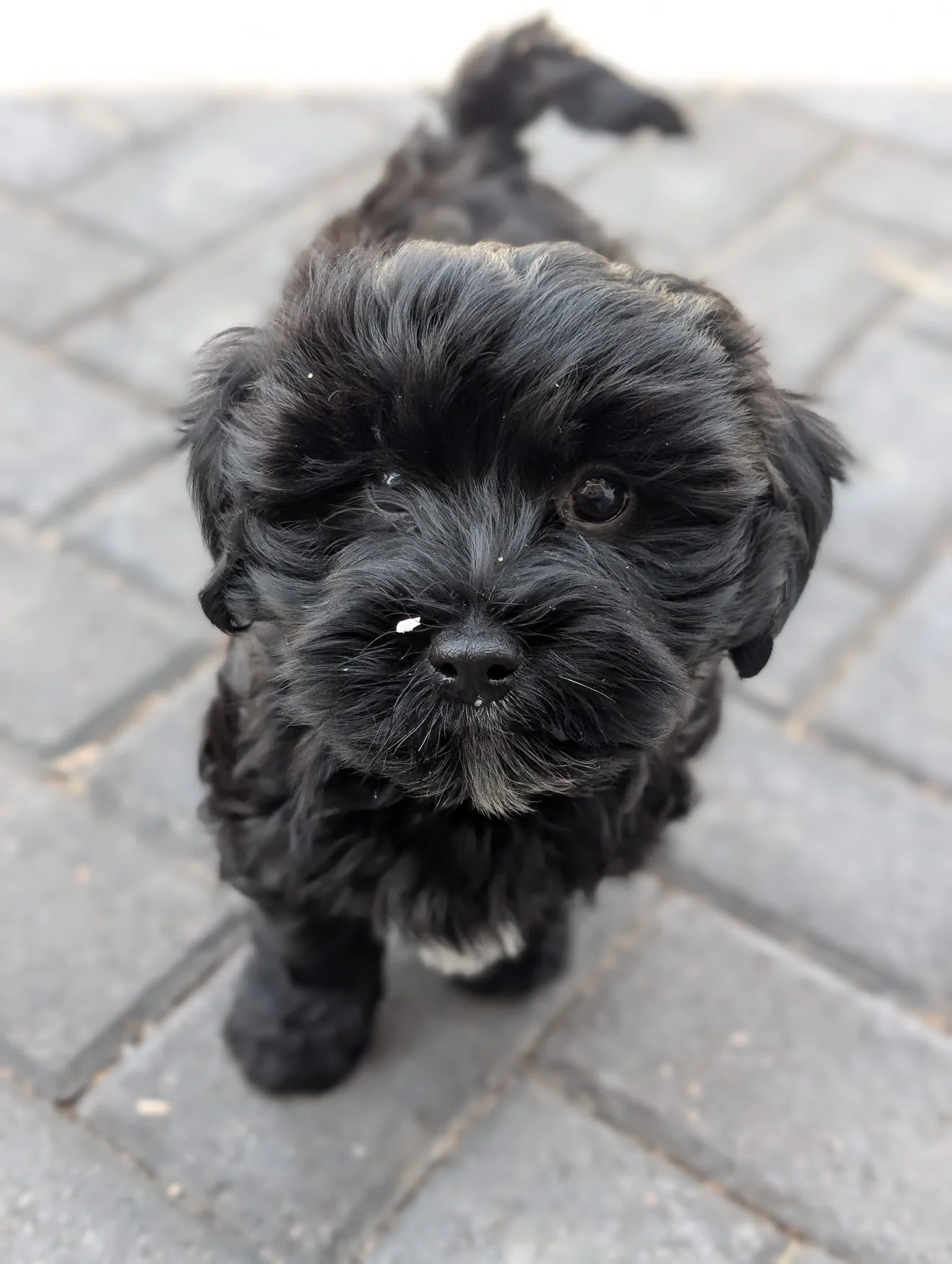
Winston
Your puppy is actively exploring and gaining confidence. Nighttime accidents or early outings aren't unheard of, but aren't common. All basic commands are becoming more reliable, and we're working on "wait" and continuing to strengthen "eyes" – building their ability to hold focus for longer periods. They may be starting to learn to ring a bell, which eventually they will be able to use to ask to go outside. Walks on our property are getting a bit longer, but still require active management.
We're starting to introduce environments beyond our property – walks in our local mountain towns, meeting new people, encountering new sights and sounds. They're learning to look to people for guidance in unfamiliar situations rather than shutting down or pulling toward distractions.
They're also becoming more energetic and playful! They're not trustworthy from a potty standpoint yet, but can start to have more supervised loose time exploring the house. They're comfortable with regular grooming and handling, and settling well for alone time in their crate and pen.
Regression is common around this age as puppies enter early adolescence. They may test limits, ignore commands they know, or seem to backslide on potty training. This is a completely normal developmental phase – and it's one reason why having your puppy in a consistent, structured environment during this period can be so valuable. We'll work through it with patience and consistency so early training sticks.
7-8 weeks with us
(going home at ~15-16 weeks old)
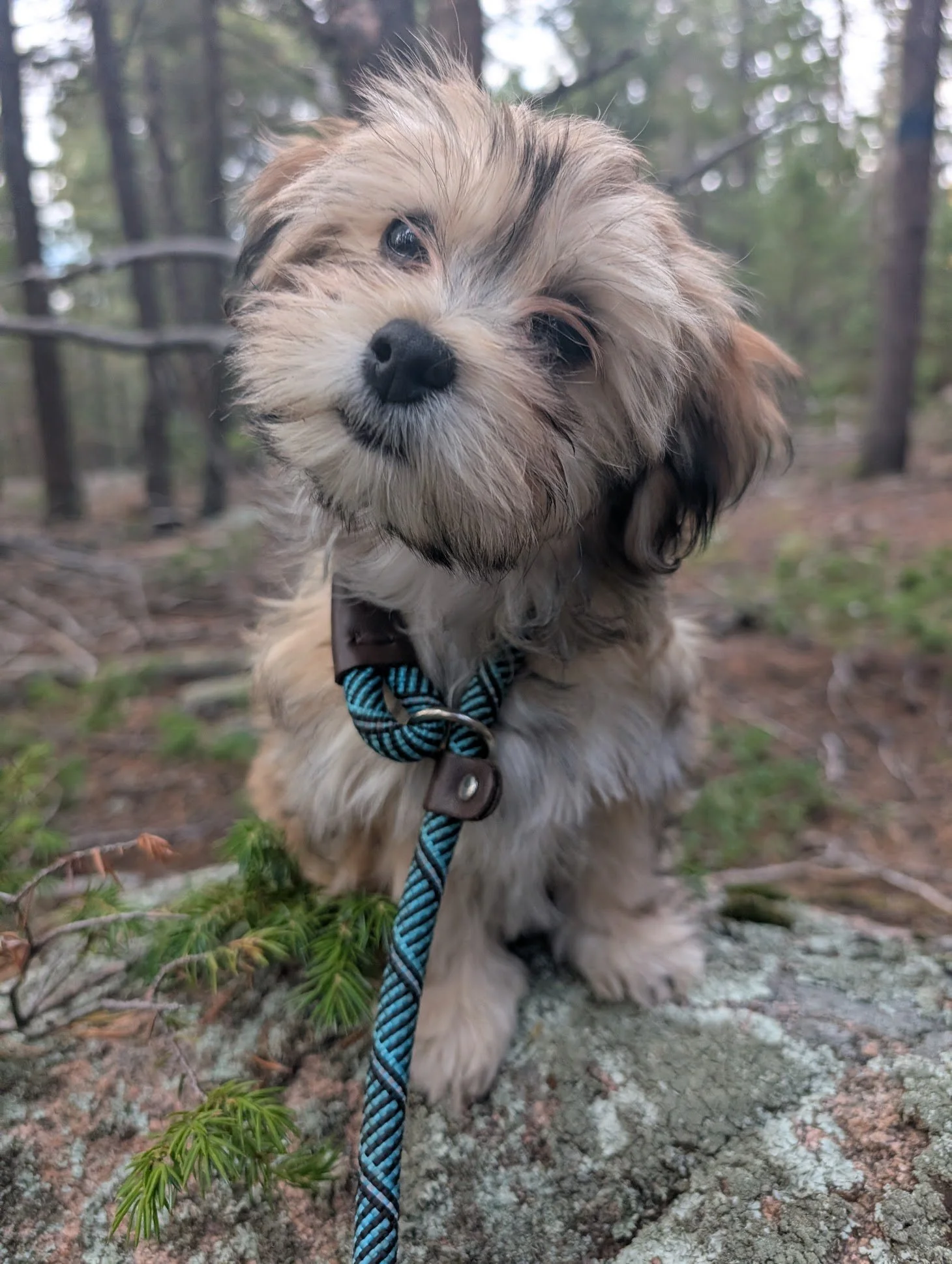
Lola
Puppy adolescence is in full swing. Boundary-testing, selective listening, and "forgetting" commands they knew last week are all par for the course. This isn't a sign that something is wrong – it's a normal part of growing up. The key is consistent, patient training through this phase.
We're working on longer "stay," more reliable recall, and continued socialization in different environments. Your puppy is practicing looking to people for guidance when they get excited or worried – an important life skill. "Eyes" and "touch" continue to be key tools for redirecting their attention when the world gets exciting.
They still require containment and supervision for potty training, and balancing sleep and active play remains important. They're solid with handling and grooming, and comfortable with alone time in familiar settings.
9-10 weeks with us
(going home at ~17-18 weeks old)
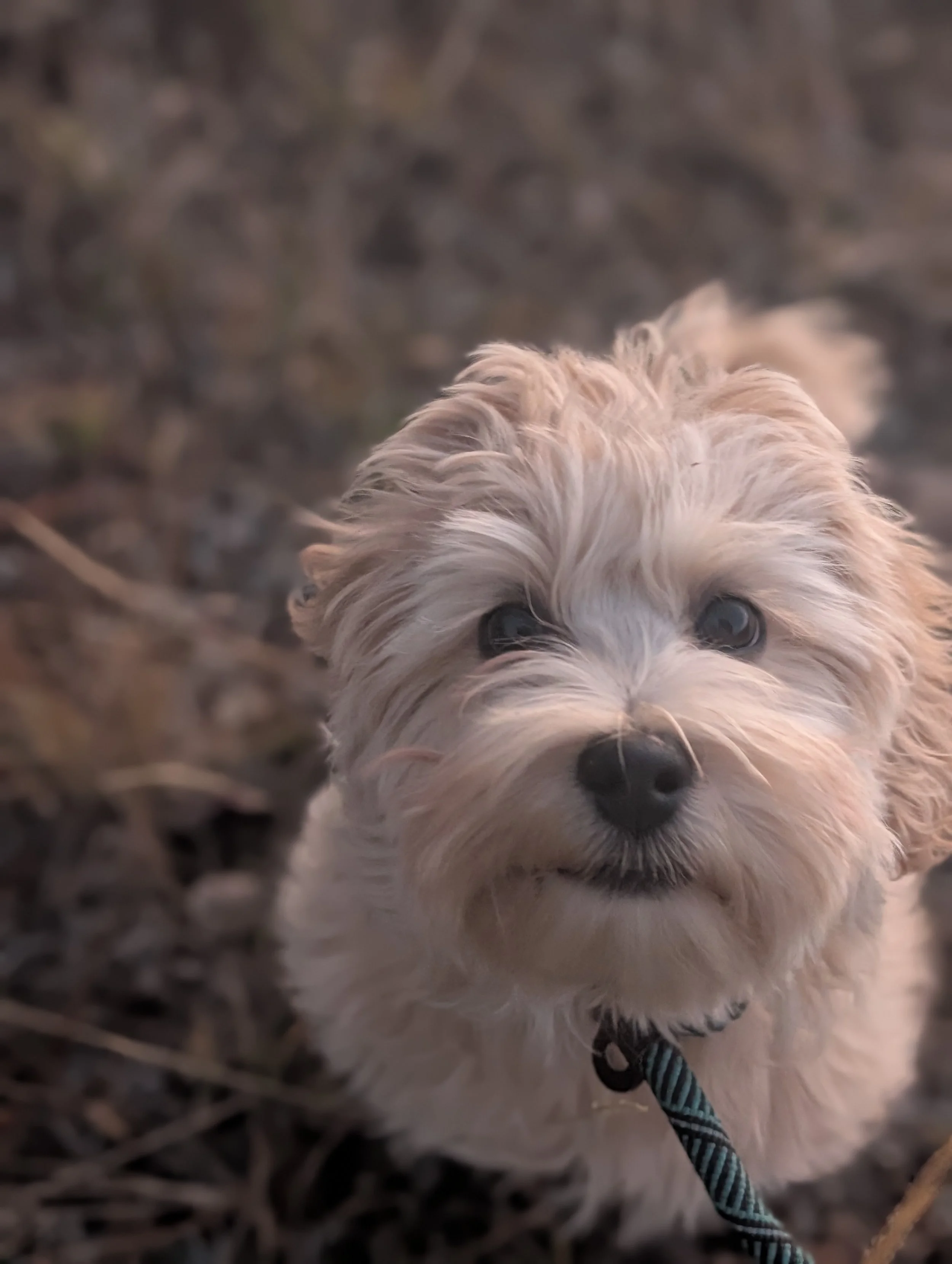
Stella
Your puppy is having fun learning – we're adding commands like "roll over" and "out," and working on polite greetings with new people. Crate time, naps, and indoor play have a comfortable rhythm. Focus on walks comes more quickly, though they'll still start out a bit distracted.
They're solidly comfortable with handling, grooming, and alone time. Their socialization foundation is strong – they've met many people, experienced a variety of environments, and learned to recover quickly from novel or surprising situations.
They've had more opportunities to explore the wider world – busier streets, pet-friendly stores, and other environments where they'll encounter unfamiliar dogs and people.
The peak of adolescent chaos is starting to settle, though you may still see occasional regression, especially when encountering new challenges or environments. The difference now is that your puppy has a deeper foundation to fall back on, and they bounce back more quickly.
11-12 weeks with us
(going home at ~19-20 weeks old)
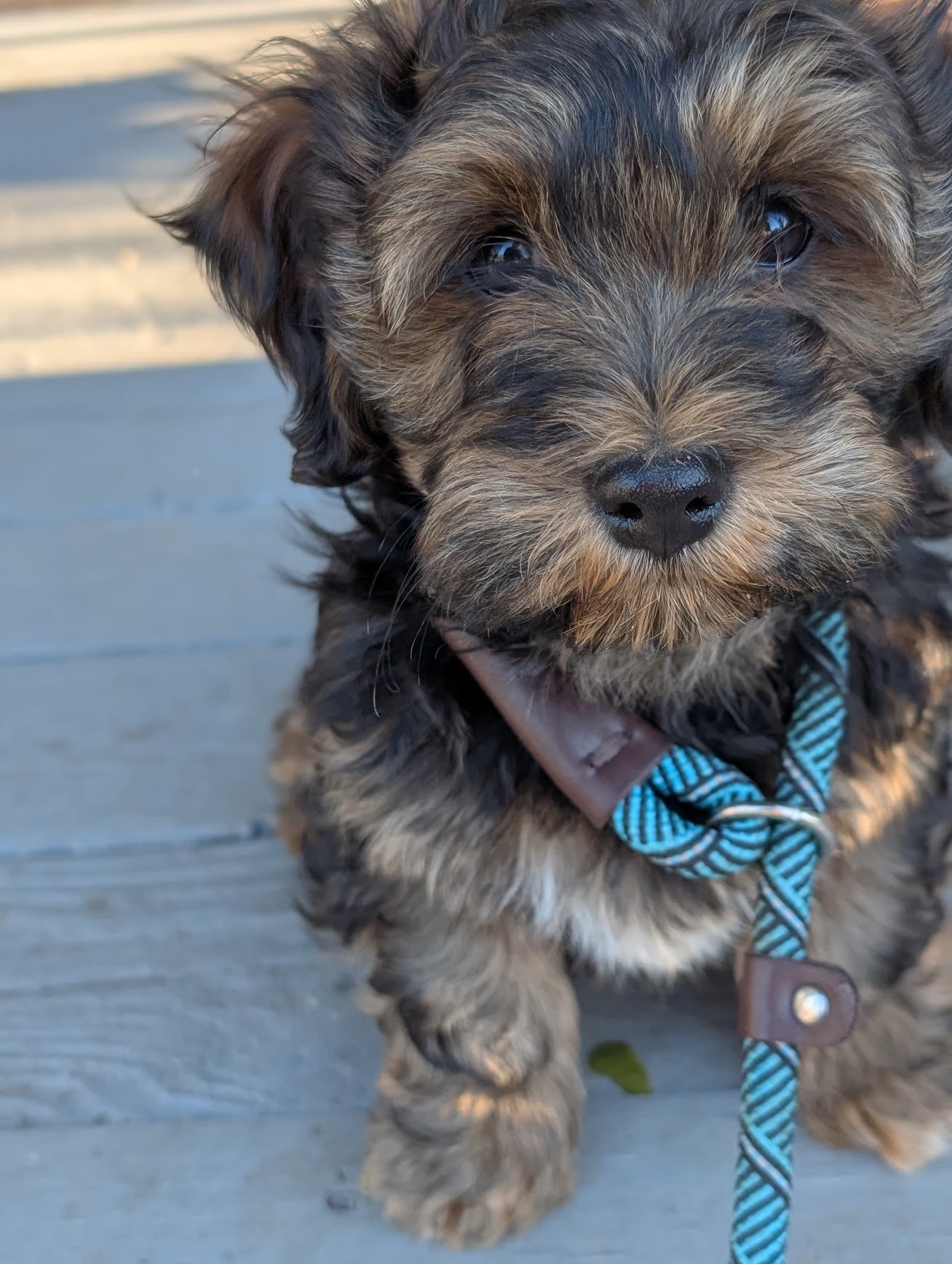
Ricky
Continued progress across the board. Commands are more reliable, focus is improving, and your puppy has a solid foundation of positive experiences to draw on. The boundary-testing of early adolescence is giving way to a calmer, more settled temperament – though they're still very much a puppy! They may (or may not yet!) start to ring the bell on their own to ask to go outside.
They've had extensive socialization across many environments and situations. They're well equipped to handle the transition to their new home and continue building on what they've learned with you.
Some regression is still possible (especially during the transition home) but your puppy has been through enough consistent training that they'll stabilize quickly.
Beyond 12 weeks
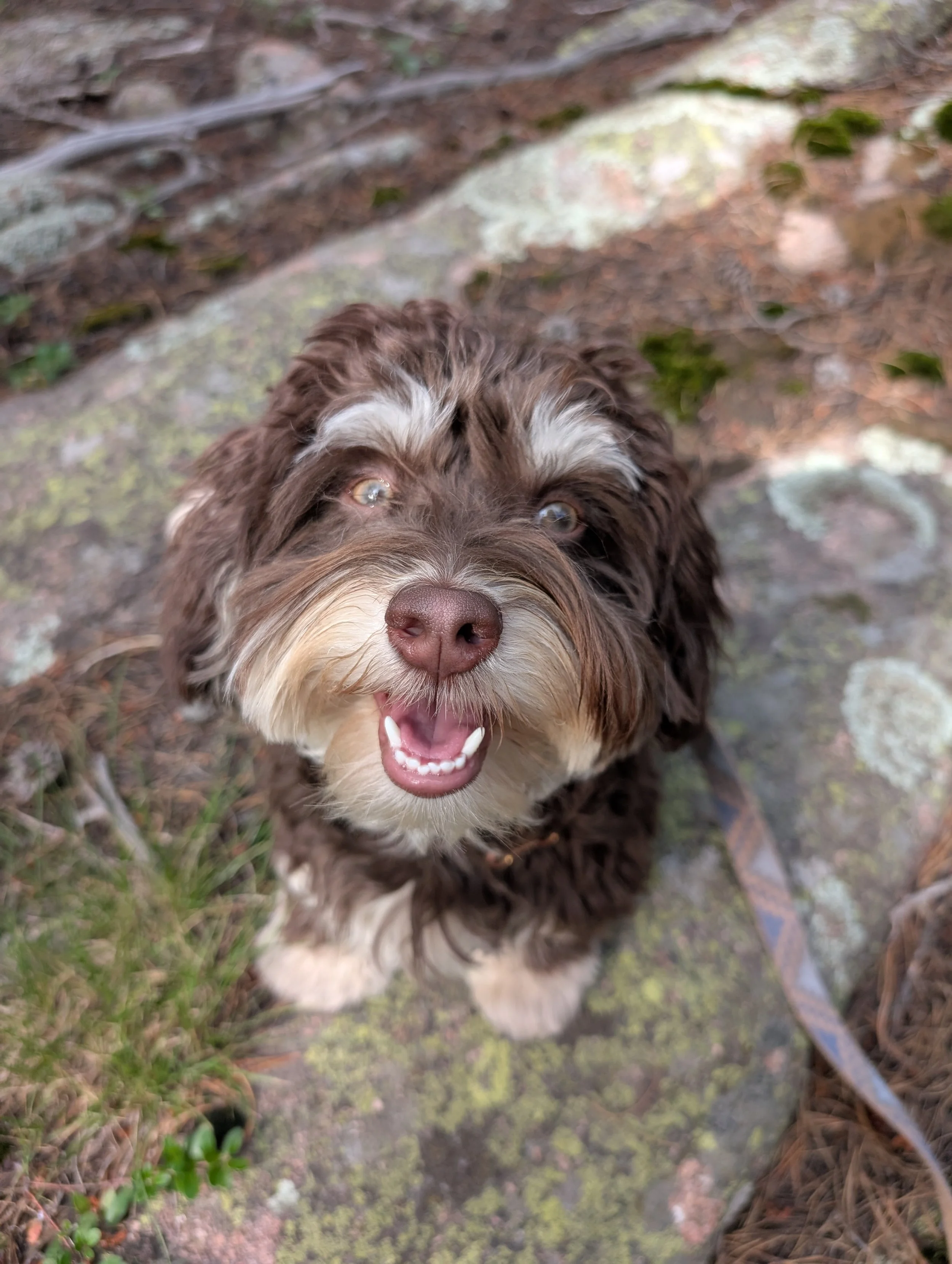
Huey
For families who want to skip more of the puppy chaos and welcome home a young dog with a solid foundation, longer stays allow us to go deeper on everything above. With longer stays, your puppy will have the benefit of:
More training. With more time and repetition, commands become more reliable, and maintaining focus in distracting environments gets easier. Your puppy has practiced making good choices over and over, in many different situations.
More extensive socialization. We can expose your puppy to a wider variety of people, places, sounds, and experiences. This allows us to build the kind of broad foundation that helps dogs stay calm, confident, and adaptable throughout their lives. This includes more trips into town, more novel environments, and more practice recovering from surprises.
More progress on potty training. While no puppy this age is fully potty trained, longer stays mean more weeks of consistent reinforcement. Your puppy comes home with stronger habits and a longer track record of success – though you'll still need to maintain containment and supervision as they adjust.
A smoother transition home. Puppies who stay longer have moved further past the neediest, most demanding phase of puppyhood. They're more independent, more settled, and better equipped to handle the adjustment to a new home without regressing as much.
Navigating adolescence here. The 4-6 month age range can be challenging – puppies test boundaries, "forget" their training, go through teething, and push limits. Having your puppy with us through this phase allows for more consistent, patient reinforcement, so that early training sticks (and fewer of your things get chewed on). By the time your puppy comes home, the hardest parts of adolescence are already behind them.
Even puppies who stay with us for an extended period will still need continued training and patience when they go home. They're young dogs, not finished products. But the foundation will be strong, the hardest work will be behind you, and you'll be starting your life together from a very different place than you would with an 8 or 10-week-old puppy.
When Your Puppy
Comes Home
No matter how long your puppy stays with us, we want to make sure you feel confident continuing their training at home.
When you pick up your puppy, you'll receive:
A written guide covering the commands and routines your puppy has learned, along with tips for maintaining their progress.
Videos demonstrating the commands and hand signals so you can see exactly what your puppy knows.
Follow-up support - we're happy to answer questions as your puppy settles in.
Discounted in-person lessons if you'd like hands-on help reinforcing their training or working on new skills after they come home.
Questions?
We're always happy to talk through what might be right for your situation. Every puppy and family are different, and we're happy to help you figure out a good plan for yours – even if our Stay and Play program doesn't end up being the right fit. Feel free to reach out with any training questions you have.